« pour une sage mobilité
du corps et de l’esprit » 🦎
« Se mieux connaitre est le premier pas vers la résolution ;
c’est une prise de conscience. »
« FONDEMENTS DU FONCTIONNEMENT DE L’ESPRIT »
La psychologie bouddhique s’intéresse au fonctionnement de notre esprit et à la manière dont nous percevons le monde. Elle nous est parvenue par l’ « Abhidhamma » , troisième partie du « Tipitaka » (env. 300 av. JC), qui réunit l’ensemble des exposés psychologiques et philosophiques de l’enseignement du Bouddha.
Elle offre une compréhension pratique, simple et concrète de notre comportement et de nos sentiments dans nos quotidiens. Ainsi, elle permet de saisir les raisons et les mécaniques de nos souffrances ; et donc aussi de saisir nos accès à une vie plus heureuse.
Basée sur une approche différente du Soi, elle propose une perspective alternative à l’approche occidentale, par une approche plus intériorisée et comportementale, héritage de la culture et de la sagesse bouddhique.
Formations proposées
Stages de weekend « Vivre Heureux au Quotidien » (2 jrs)
– « Donner un Sens Heureux à sa Vie – mod.1 »
– « Réussir le Changement dans sa Vie – mod.2 »
– « Inspirer son Quotidien avec Sage Psychologie – mod.3 »
The Course « Wisdom in Daily Life » (40+10 hours, within 6 fortnightly days)
– 🇬🇧 « Buddhist Psychology in Daily Life : Fundations and Applied Practice
– 🇫🇷 « la Psychologie Bouddhique au Quotidien : Fondements et Applications »
Note : cette formation est proposée en anglais, pour une audience internationale ; les Stages de weekend « Vivre Heureux au Quotidien » offrent une alternative francophone, intimiste et immersive dans les Alpes Suisses ☀️🏔️🚠🏔️🇨🇭

Fondements de cet enseignement
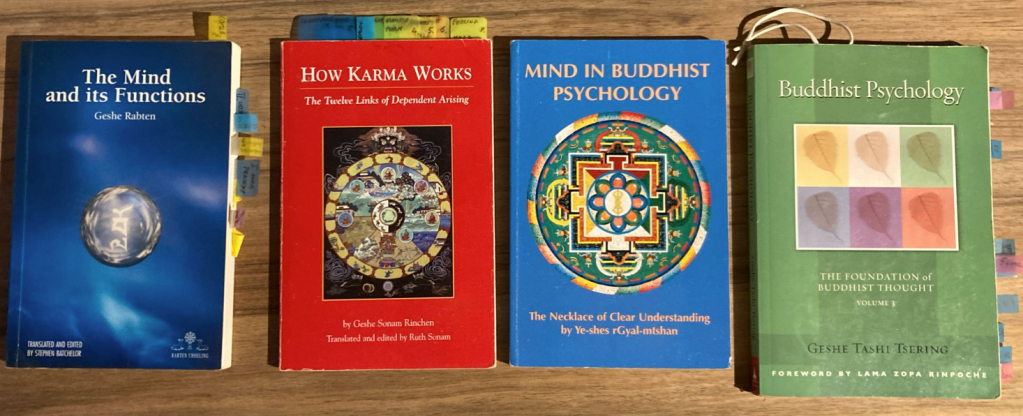
L’enseignement est fondé sur l’étude assidue des plus grands Lama, Geshe, et auteurs reconnus pour leur grande connaissance de la psychologie bouddhiste ; ainsi que sur mes propres cours appliqués « Vivre Heureux au Quotidien » – PsychologieBouddhique.ch .
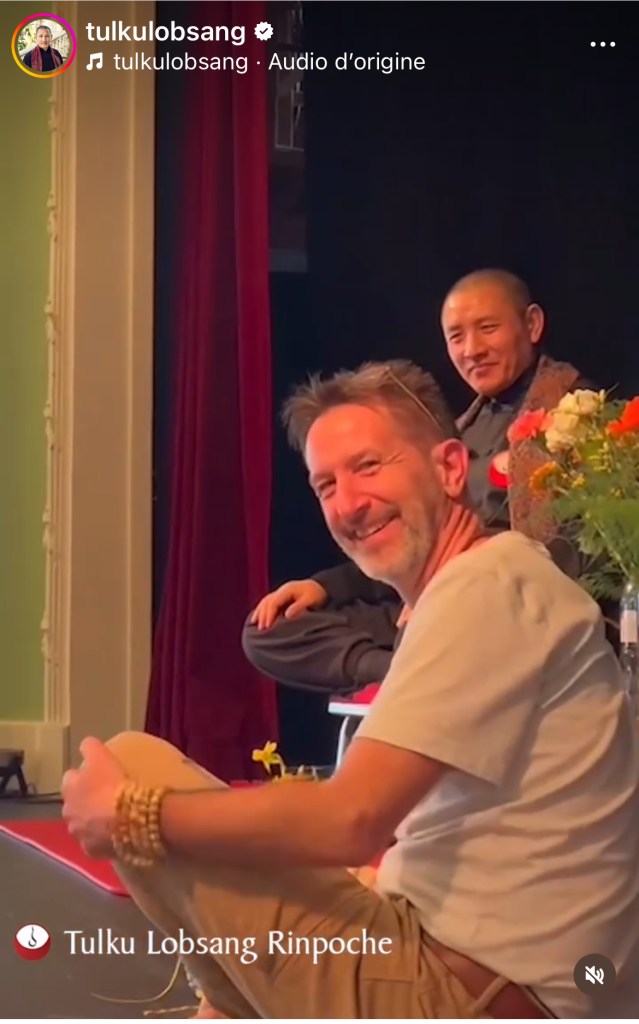
Ces inspirantes références sont :
- Tulku Lobsang Rinpoché
- Geshe Tashi Tsering
- Geshe Rabten
- Geshe Sonam Rinchen
- Geshe rGyal-mtshan
- Steven D. Goodman
- Tarayogini Maaike Decock
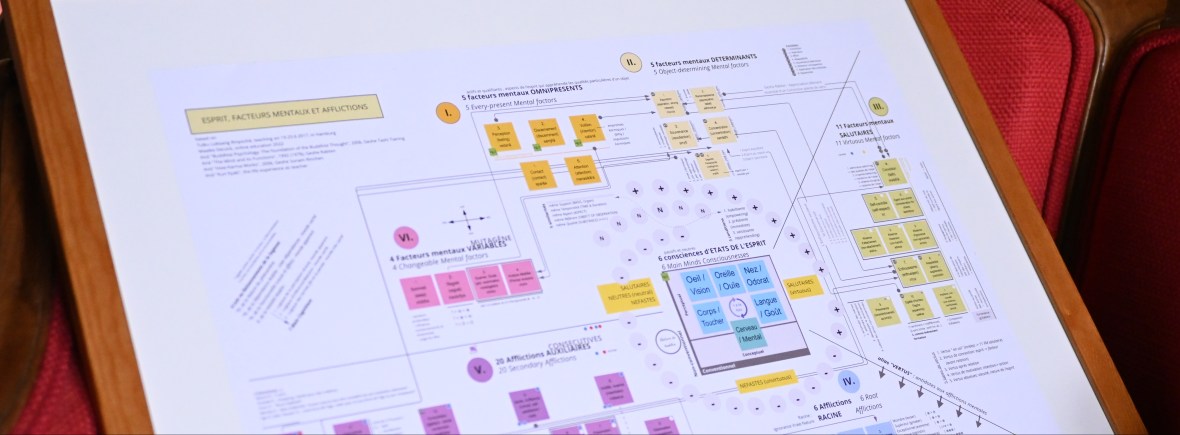
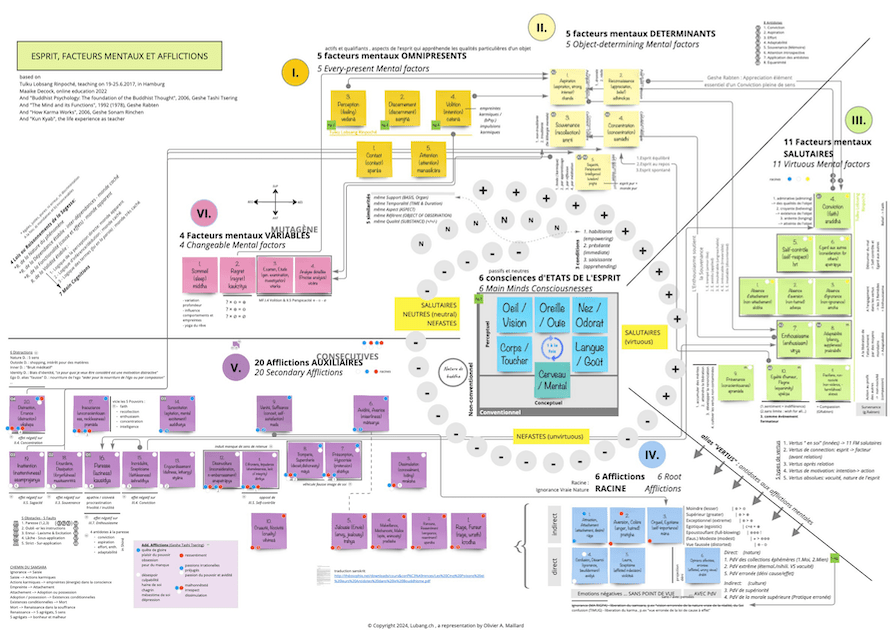
Pendant 7 ans, Olivier en a créé une Carte conceptuelle : elle fut inspirée lors de la retraite avec Tulku Lobsang Rinpoché en 2017 à Hambourg ; et depuis, par ajouts successifs, elle est devenue le résultat de l’étude et de l’expérience de la vie enseignante – « Kun Kyab ! » .
Elle lui sert désormais de référence et fondement pour toutes les formations qui touchent à la Psychologie Bouddhique, telles que listée plus en haut de page.
« Bouddhique » ?
Pourquoi utiliser l’adjectif « bouddhique » ?
Le terme « Buddhist Psychology », communément utilisé dans les traductions anglophones, est ici traduit par « Psychologie Bouddhique » – et non pas « Psychologie Bouddhiste ». Cette posture est un choix assumé de nature linguistique et philosophique. En effet :
L’adjectif « bouddhiste » défini une personne comme « adepte du bouddhisme », et se réfère au clergé bouddhiste, donc au caractère religieux du bouddhisme ; alors que l’adjectif « bouddhique » qualifie un concept qui est « relatif au bouddhisme », et ne porte donc pas de connotation religieuse. Ainsi, linguistiquement, « bouddhique » parait plus correct à utiliser pour qualifier une sagesse qui fut énoncée avant l’existence de la religion bouddhiste.
Philosophiquement, le choix du qualificatif « bouddhique » est une posture qui permet de clarifier le caractère non-religieux de ce sujet d’étude qu’est la Psychologie Bouddhique.
Carte conceptuelle
« Sagesse pour le Quotidien »
La Formation🇨🇭(🇫🇷)
Familiarisation à la Psychologie Bouddhique
en quelques points …
🇨🇭 une formation Swiss made
🖥️ délivrée en ligne avec passion
📅 sur 40 heures (6 jrs)
💶 1’390 chf / 1’480 €
« Wisdom in Daily Life »
The Course 🇬🇧
Introduction to Buddhist Psychology
in a nutshell …
🇨🇭 a Swiss made course
🖥️ taught online with dedication
📅 within 40 hours (6 days)
💶 1’480 € / 1’390 chf
…in 🇬🇧 English, or 🇫🇷 French, taught according to participants’ preferences and constellation
Pour celles et ceux qui préfèrent le français 🇫🇷 et le présentiel 🙋♀️🙋🙋♂️ … les Stages de weekend « Vivre Heureux au Quotidien » offre une alternative intimiste et immersive dans le Val d’Anniviers (vs) ☀️🏔️🚠🏔️🇨🇭
Let’s continue in English
Introduction
Buddhist psychology is concerned with how our mind works and how we perceive the world. It has come down to us through the “Abhidhamma”, the third part of the “Tipitaka” (c. 300 BC), a collection of psychological and philosophical exposés of the Buddha’s teachings.
It offers a practical, simple and concrete understanding of how we behave and feel in our daily lives. In this way, it enables us to grasp the reasons and mechanics of our suffering, and thus also our access to a happier life.
Based on a different approach to the Self, it offers an alternative perspective to the Western approach, through a more internalised and behavioral approach, inherited from Buddhist culture and wisdom.
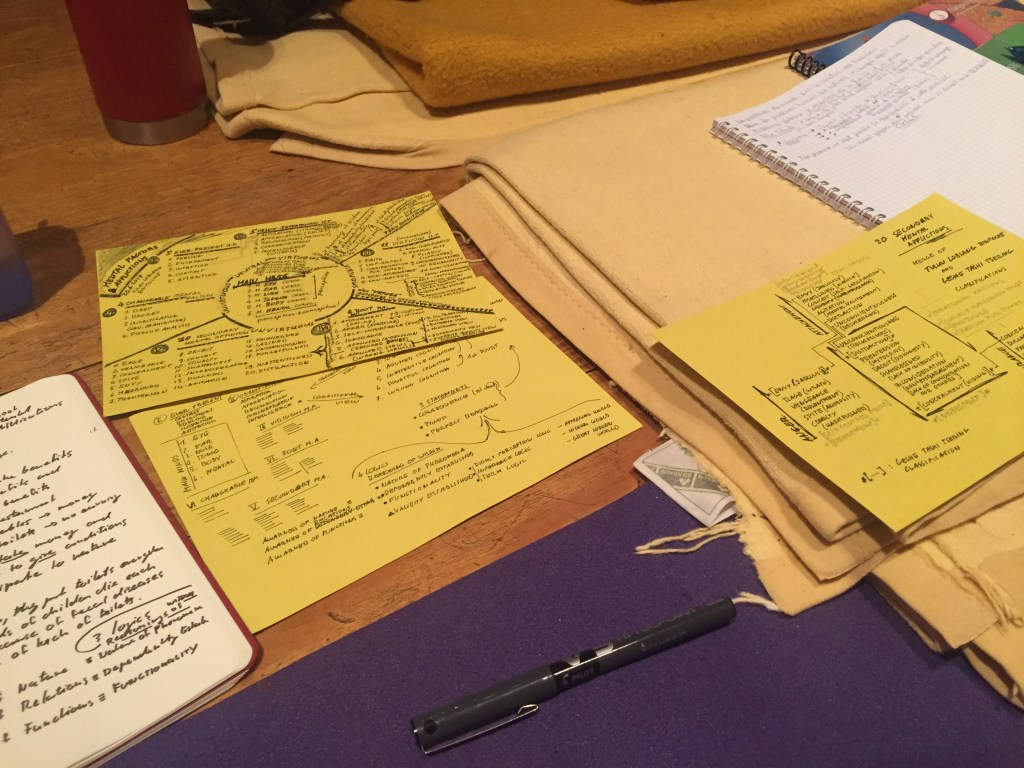
Olivier’s notes from 2017 retreat with Tulku Lobsang – lubang.ch
In this 40-hour training course (+ 10 h of personal practice), you’ll discover all the concepts on which Buddhist psychology is based: States of Mind, Mental Factors, Cognitive Events, Levels & Statements of Cognition, Wisdom Reasonings, Concept and Perception & Twelve Links of Interdependent Araising.
In addition, this training covers all the themes that feed into the Self-awareness courses (“Giving happy meaning to your life…” and “Making successful change in your life…”).
You can then become an observer of the workings of your mind, and a creator of your life and the way you interact with the world.
Taught topics
This course is laying the foundations for understanding :
- How the human mind perceives
- How we make sense of our perceptions
- The adverse impact of our emotions and sensations on our representation of reality
- The non-unique, non-permanent and non-independent nature of the Self
- The possibilities of freeing ourselves from erroneous views and obstacles
- The mechanisms and methods that enable lasting change
- The conditions that enable change to offer a more serene and peaceful life.
The course consists of a combination of in-depth knowledge acquisition, experiential scenarios and integration exercises, allowing you to immerse yourself in the application of Buddhist psychology, in what it means for you and in the context of your personal or professional life.
Foundations of teaching
The teaching is based on the assiduous study of the most renown Lama, Geshe, and authors renowned for their great knowledge of Buddhist psychology ; and my own applied « Living Happily In Daily Life » courses in the Swiss Alps – www.PsychologieBouddhique.ch . Main references are :
- Tulku Lobsang Rinpoché
- Geshe Tashi Tsering
- Geshe Rabten
- Geshe Sonam Rinchen
- Geshe rGyal-mtshan
- Steven D. Goodman
- Tarayogini Maaike Decock
Specifics in this course
As part of my commitment to experiential learning, I have developed several tools for experiential practice that promote the integration.
- Creative practice with experiencing 3d toys and tools
- Original card decks for experiential play with perceptions and concepts
- Extended mind map of concepts
Course Outline
- 6 days, fortnightly, in-week days (custom planning to be discussed with attendees)
- 09:00-12:00 and 13:30-16:30
- Remote interaction, Online Meeting, whiteboard and interaction applications
- 1480.- € or 1390.- chf
- Swiss made🇨🇭, and taught in 🇬🇧 English, or 🇫🇷 French (according to participants’ preferences and constellation)
- … keeping adaptability for the everybody’s best set
Registration by email
- You’ll find Olivier email on the contact page – ➤ Contact ➤ ➤
- Pre-registrations help recording your interest and bolstering the formation of an attendees’ constellation that reach the conditions for course occurrence.
- Registration (*) are possible on explicitly communicated dates on the web site (www.lubang.ch/agenda)
- (*) Registration conditions :
- Pre-registration : no fee ; Registration : 500.- €/chf for attendance confirmation.
- Full fee due on 30 days before course’s first planned day
- Final course confirmation : 3 weeks before course’s first planned day
- No refund. In force majeure cases, the non-participation can be arranged for partial or full replanning in a future course.
Set of Tools

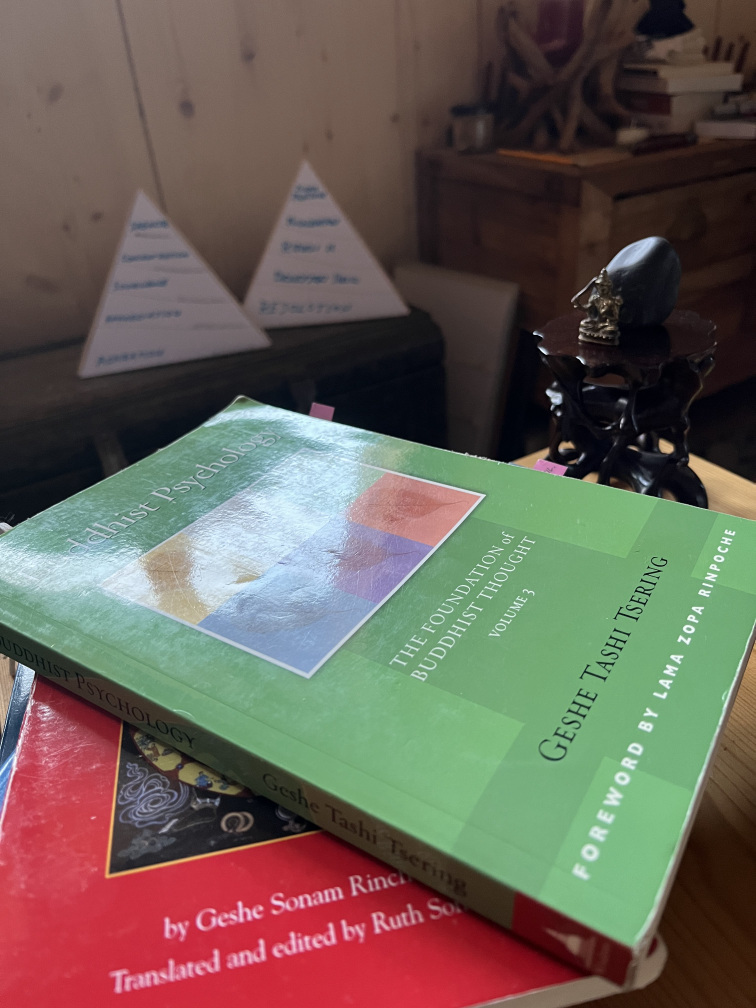
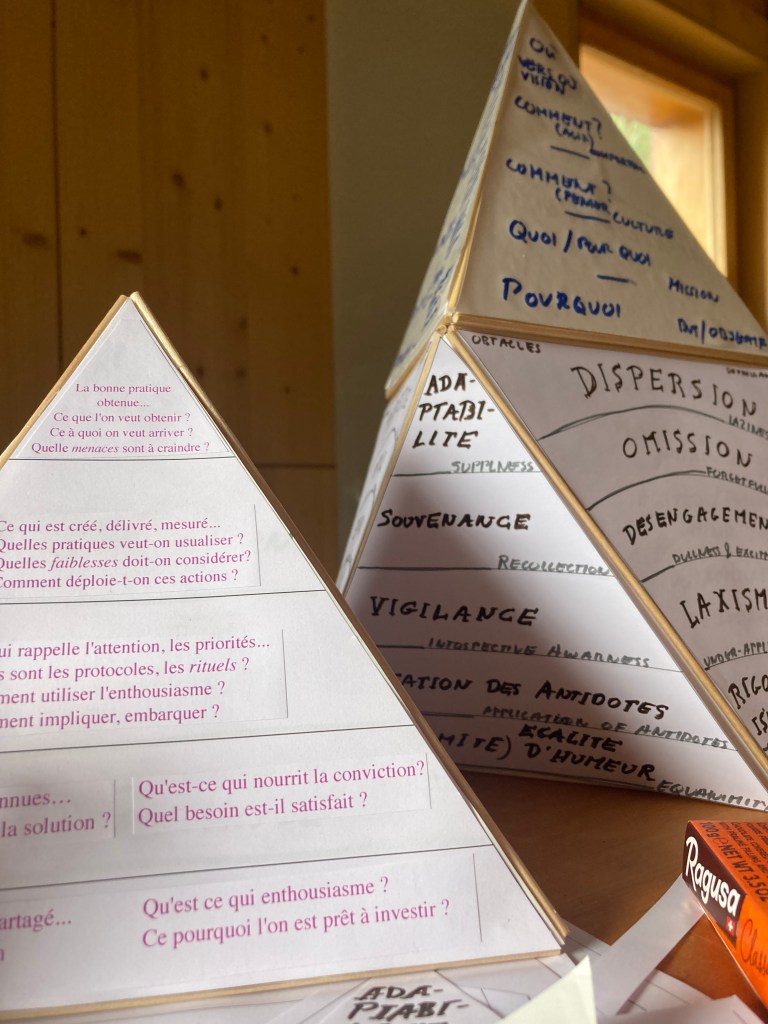
 lubang